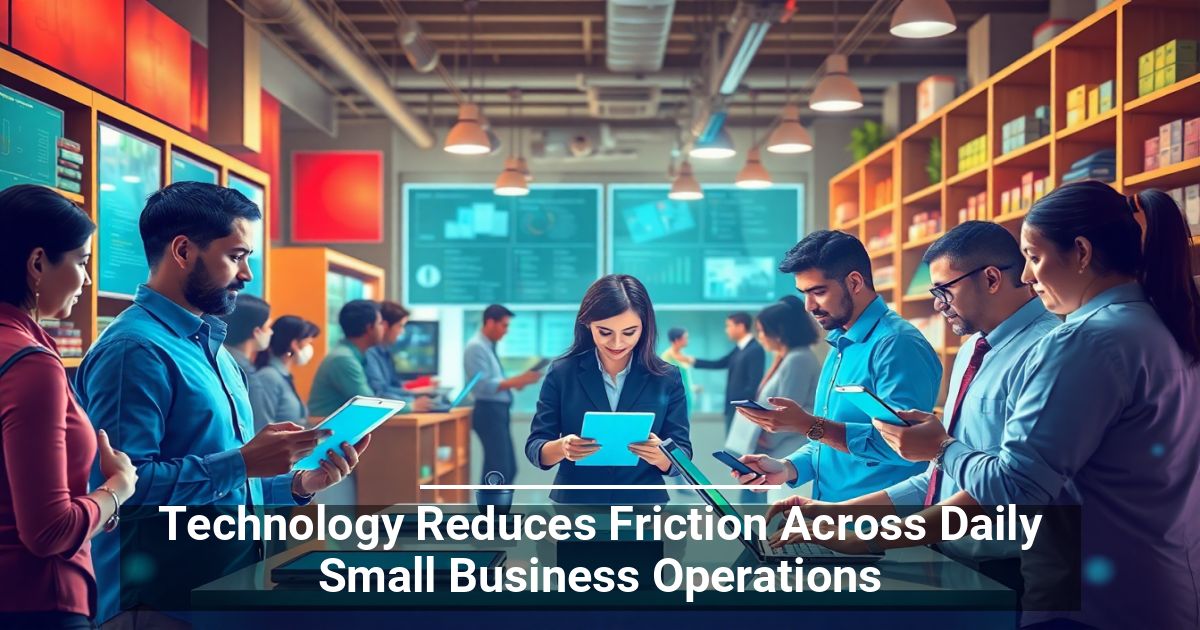
 Even with recent advances in technology, many people still experience friction in the workplace due to operational processes. That friction is problematic, as it can lead to reduced productivity, declining employee morale, and increased operational costs. Learning how technology improves small business operations helps streamline operations.
Automation Streamlines Daily Business Tasks
One of the key systems small businesses should incorporate into their operational processes is automation. Automating repetitive or tedious tasks helps minimize friction by shortening the time it takes to handle everything from data entry to reporting.
Through automation, businesses can complete tasks faster and with greater accuracy. Automation also reduces bottlenecks by streamlining workflows and reducing the number of steps necessary to finish routine tasks.
AI Improves Small Business Workflow Efficiency
When learning how technology reduces friction in business operations, it's important not to overlook the benefits of AI. AI can enhance workflow efficiency by quickly analyzing data to provide real-time insights that support faster decision-making. Instead of depending solely on manual or outdated processes, small businesses can use AI tools to identify patterns and improve operations by streamlining processes.
AI can also help reduce the friction businesses experience with customer interactions. These intelligent and adaptive systems can automate responses based on customer behaviors and assist directly with customer interactions. Customers appreciate fast transactions, positive and timely interactions, and quality engagement with businesses, which help build trust and loyalty.
Self-Service Technology Reduces Operational Friction
Self-service technology allows employees and customers alike to resolve issues independently, which reduces the need for manual support while minimizing delays. Businesses can incorporate tools like automated help systems, knowledge bases, and guided workflows into their daily operations to provide quick access to information and potential solutions to problems that arise for customers and workers.
When people can find answers to problems without interacting with multiple people or systems, it helps businesses reduce wait times and improve their overall efficiency. Well-designed self-service systems also create a smoother user experience by offering clear guidance to prevent confusion and eliminate unnecessary friction.
Smart Tools Simplify Business Operations
Small businesses can help reduce the "swivel chair" effect that many enterprises experience when they encounter friction. Through automation, cloud-based tools, and disparate system integration, businesses won't have to constantly switch between applications to complete tasks. Instead, they can save time and reduce errors using a fully integrated system.
AI Frees Employees for Higher-Value Work
Frictionless systems boost business productivity by reducing or entirely eliminating repetitive, time-consuming tasks. Through AI-enhanced automation, routine processes like data entry, scheduling, and basic customer interactions are simplified. When employees spend less time on manual work, they can focus more on higher-value responsibilities, such as problem-solving, strategizing, and customer engagement.
Understanding how technology improves small business operations helps business owners identify opportunities to reduce inefficiencies and streamline workflows. By combining AI with automation, businesses can improve productivity, lower costs, and stay competitive.