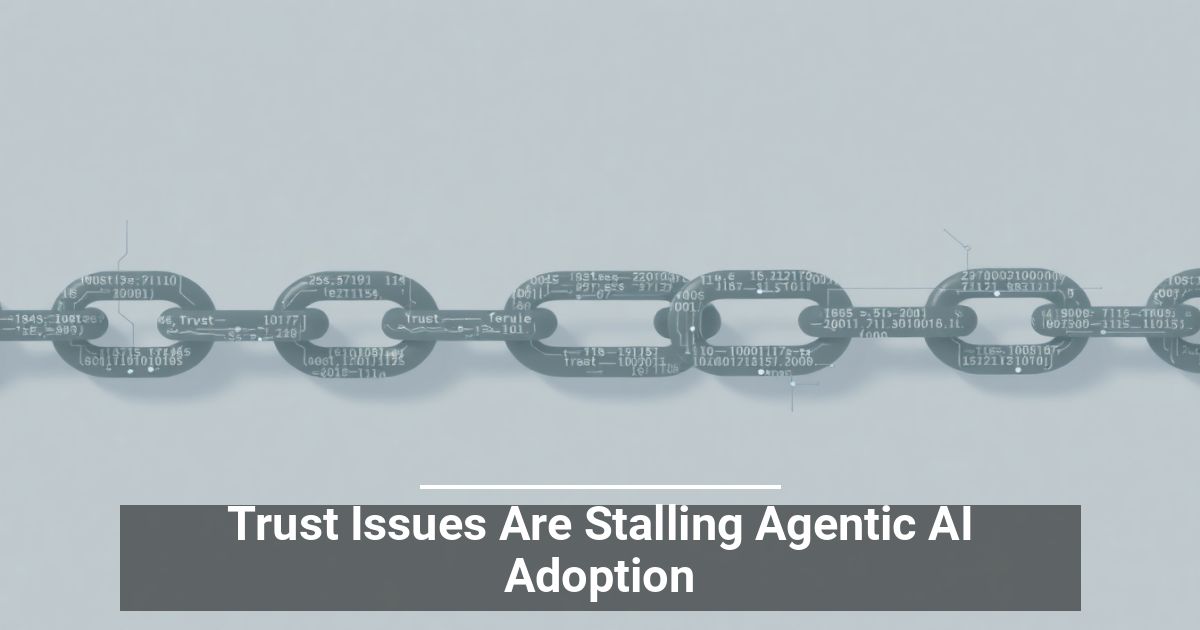
 Agentic AI adoption is quickly becoming a top priority for forward-thinking businesses. On paper, the promise is huge: smarter automation, faster decision-making, and AI systems that can act independently to handle complex workflows. But in reality, many organizations are hitting a wall, and there’s a growing trust gap standing between bold AI ambitions and real-world results.
Camunda's 2026 State of Agentic Orchestration and Automation report revealed that nearly three in four organizations (73%) admit there’s a disconnect between what they want to do with agentic AI and what they’re actually able to deploy. Even more telling, only 11% of use cases made it into full production last year.
The fact is, there’s a serious lack of trust when it comes to handing over critical business functions to AI. Businesses are pouring money into these tools, but the ROI is dismal because they're stuck in pilot mode or limited experiments, and full adoption feels like a leap of faith they’re not ready to take.
Big Dreams, Small Production Numbers
On the surface, companies appear to be embracing AI at scale. Proofs of concept, pilots, and experimental automations are everywhere. But when it comes time to move from testing to real business impact, most projects stall.
Why? There’s limited confidence that AI agents will behave as expected once they’re given more autonomy. Agentic AI adoption requires businesses to hand over parts of their decision-making and automation processes to systems that can act independently, and leaders worry about business risks when these agents operate without strong IT controls. What if an AI makes a bad call that costs thousands or damages your reputation?
Transparency is another concern. Most business leaders say they don't fully understand how AI works or how it makes decisions within their processes. Without confidence in how AI agents make decisions, businesses hesitate to fully integrate them into critical workflows.
Regulatory and compliance issues are also major roadblocks to Agentic AI adoption, especially in industries such as healthcare, finance, and heavily regulated sectors. One mistake can mean expensive consequences.
This hesitation directly slows organizational adoption and limits real ROI. It's not that companies don't want to adopt agentic AI. But without accountability for decision-making baked in, they hesitate to let these systems loose on mission-critical work. Instead, agents often become little more than chatbots to handle simple queries, not the game-changers everyone envisioned.
Unfortunately, this trust gap creates a vicious cycle. You experiment, hit roadblocks, pull back, and watch competitors (or at least the bold ones) inch ahead. Meanwhile, poor AI implementation leads to wasted budgets and frustrated teams.
How To Build Trust and Move Forward
To break through the trust barrier and move forward with agentic AI adoption, organizations need to focus on:
- Clear governance and accountability models
- Better transparency into AI decision-making
- Strong testing and monitoring before full rollout
- Cross-team alignment between IT, compliance, and business leaders
Companies that treat trust as a core part of their AI strategy will be more likely to move from experimentation to real, scalable automation. When businesses bridge that vision-reality divide through better orchestration, controls, and transparency, organizational adoption can finally take off.